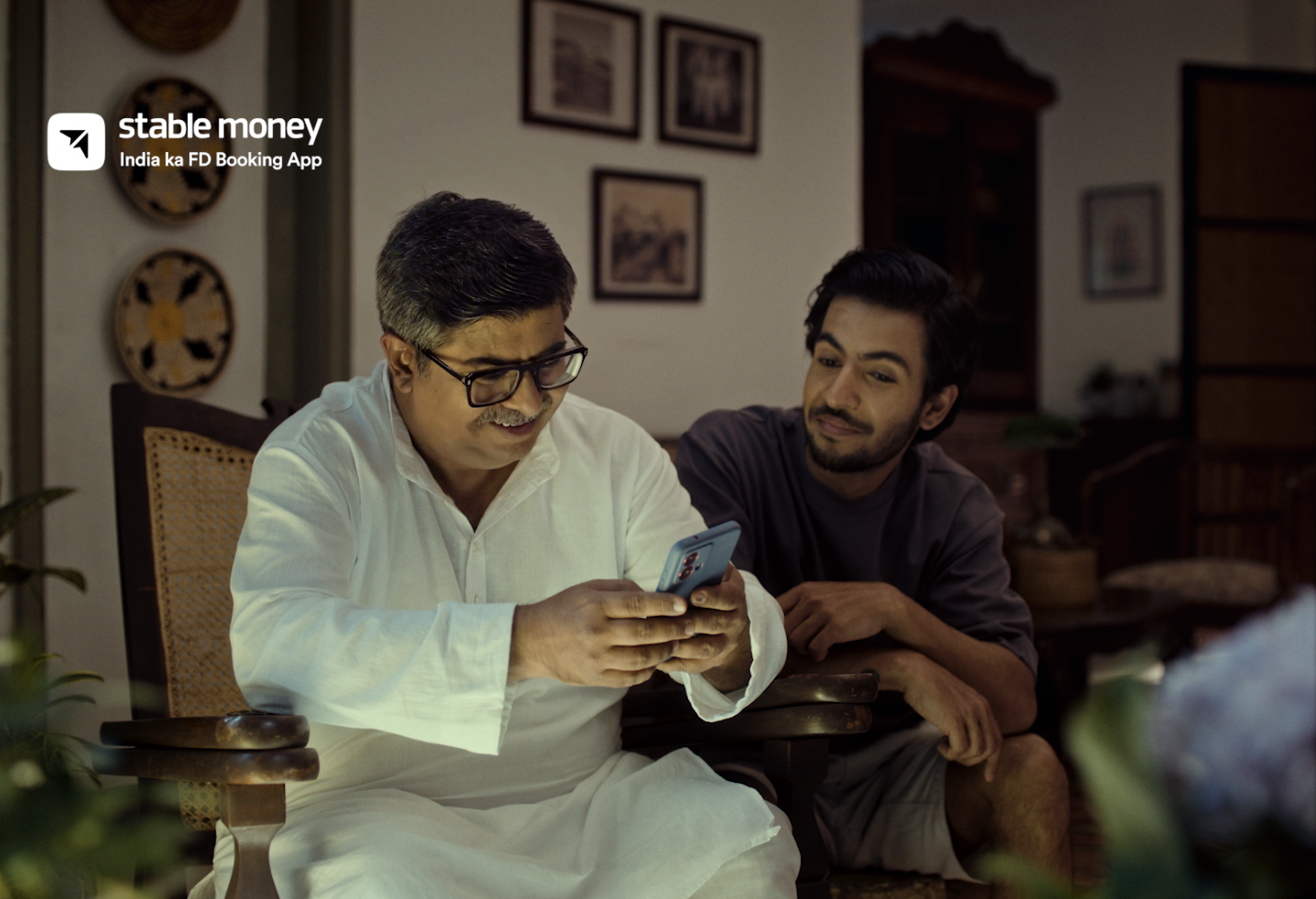
Stable Money had sharper FD rates and a cleaner app than anyone else in the category. The product was genuinely good.
But the people who needed it most weren't active investors. They were the silent majority — millions still doing FDs the way their parents did: at the bank branch, on paper, out of habit and out of trust.
They had the money. What they lacked was the confidence to hand it to an app.
It wasn't a finance problem.
It was a trust problem.
FDs were a paper-and-branch ritual for an entire generation. Convenience alone doesn't move savings. Trust moves savings. And trust, for this audience, doesn't come from a brand claiming to be trustworthy. It comes from someone they already trust.
Not the investor. The saver. The FD-loyal Indian household — cautious, smart with money in their own way, suspicious of anything that asks too much, too fast.
Nobody in the category was offering them the feeling of being safe while quietly becoming smarter.
Instead of experts, we chose family as the medium of trust. A wife showing her husband. A younger brother showing the older one. A son showing his father. Three relationships. Three conversations the audience was already having. Stable Money didn't claim to be trustworthy. Family vouched for it instead.
Most bonds advertising makes complexity worse — jargon-heavy, slapstick-lite, condescending. We did the opposite. The same families, now guiding each other one step further. Discovery again, but from a place of earned trust.
The same rooms. New categories. Bonds. Gold and silver. The FD Card.
We repositioned Bonds not as a complex financial instrument, but as the natural next step for anyone who already trusts the FD. Government and corporate bonds — reframed as the familiar made slightly smarter. Real security. No jargon. No slapstick.
Gold had always been stable. Silver had a new story — EV manufacturing, solar panels, the new economy were driving silver's growth in ways most households hadn't yet heard about. The families in the films discovered it together. The dialogue carried the insight so the ads didn't have to.
Stable Money had a card with lounge access. For Mass India, lounge access is aspirational — it signals arrival. But we had a strong recommendation: don't call it a credit card. In India, "credit card" carries debt anxiety. So we renamed it. "FD Card." Your own money, working for you. That single naming insight shaped the entire series.
The same actors the audience had followed for two years — the brothers, the husband, the wife, the father, the son — finally looked directly at the viewer and spoke.
Breaking the fourth wall. Stepping out of their stories and into the audience's living room. It moved the brand from storytelling to belief.
Familiar faces, now speaking as themselves. The most intimate the campaign had ever been. We delivered all six at cost-to-cost production, charging nothing for writing — because we're in this for the long run, not the next invoice.