“Yes, and” will take you further than “but” ever will.

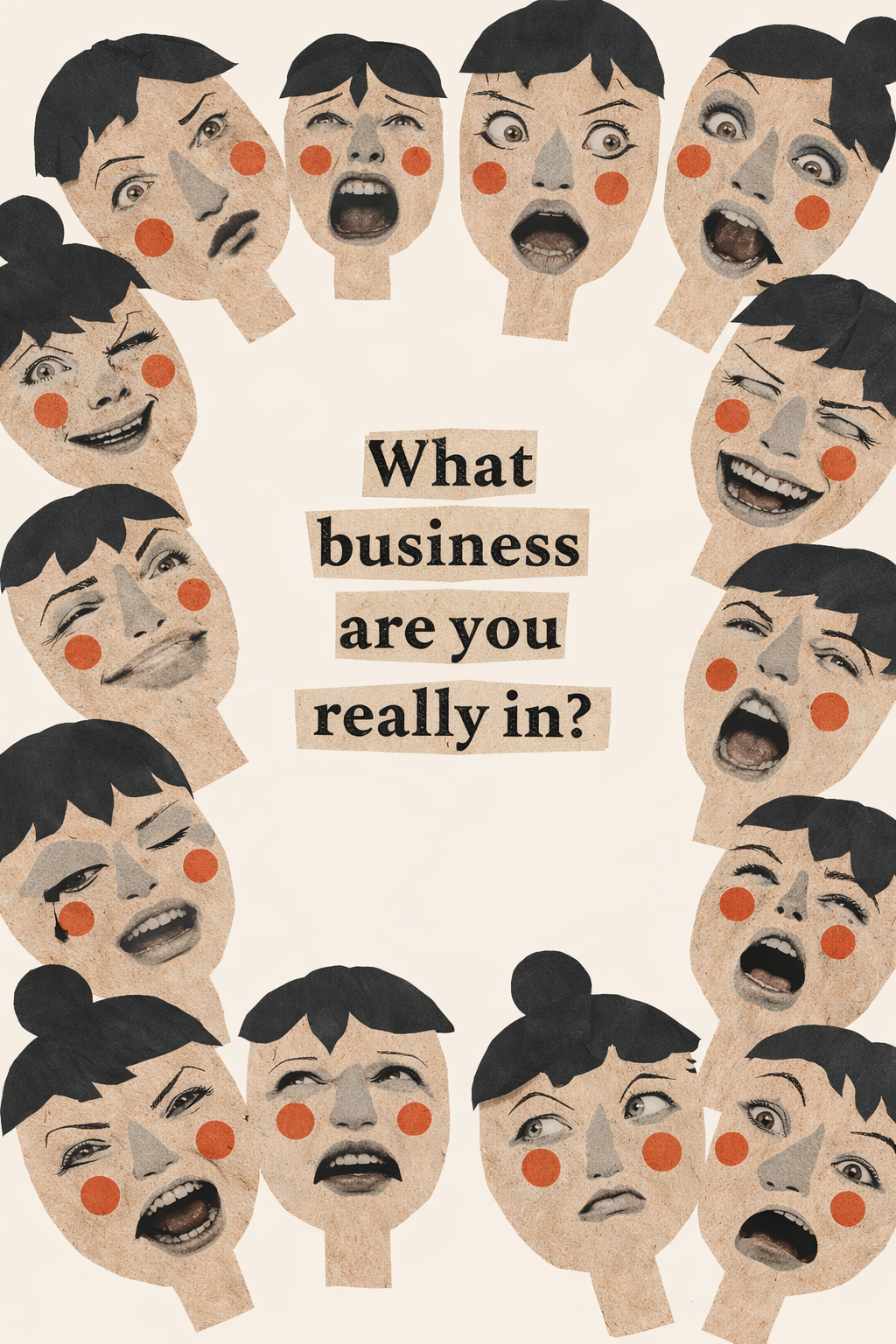
Watch what happens in most rooms. An idea is shared. There’s a micro-pause. Someone leans in and says, “Yeah, but…”
It sounds thoughtful. It signals intelligence. It establishes authority. And in that exact moment, something invisible collapses.
Psychologists call this evaluation apprehension.
The moment people sense they’re being judged, they stop taking risks. Their ideas become safer, smaller, more predictable. Over time, the room trains itself to only produce what won’t get rejected.
This is why many “smart” teams produce very average work.
Now flip the script.
At Second City, where generations of comedians and writers have trained, there’s a foundational rule: “Yes, and.” You accept what your partner offers, and you build on it. Not because every idea is perfect, but because every idea is a starting point.
There’s a well-known improv exercise. One performer says, “We’re stuck in a submarine.” The other responds, “Yes, and the oxygen levels are dropping.” No correction. No logic check. Just momentum. The scene evolves because both are committed to building, not judging.
In creative collaboration, momentum is everything.
When you say “yes, and,” you are not agreeing blindly. You are buying time for the idea to evolve. You are allowing half-formed thoughts to find their shape. You are signalling to the room that contribution matters more than correctness.
This connects deeply with the idea of psychological safety, popularised by Amy Edmondson. The highest-performing teams are not the smartest ones. They are the ones where people feel safe enough to take risks without fear of embarrassment or punishment.
“Yes, and” is how you operationalise that safety.
How we use this at Fluid
At Fluid, “yes, and” is not a workshop gimmick. It is how the work actually gets made.
In client co-creation sessions, we actively design the room to avoid premature judgment. No idea is “owned” by one person. A strategist might throw a rough line. A client adds context. A designer visualises it instantly. A filmmaker reframes it into a scene.
Instead of:
“But will this work for our audience?”
The room learns to say:
“Yes, and what if this becomes a story they see themselves in?”
This subtle shift changes everything. Clients stop evaluating and start building. The hierarchy dissolves. The work becomes shared.
You’ve seen this play out in brand sessions. A single thought like “internet should feel like recharge, not a bill” doesn’t arrive fully formed. It gets layered. Stretched. Challenged. Built upon. Until it becomes something inevitable.
Internally, we push this further through what we call mashup exercises.
We deliberately collide unlikely worlds.
Finance × cinema.
Rural India × sci-fi.
Packaging × rituals.
Someone throws a wild thought. No one is allowed to shut it down. The only rule is: add to it.
A designer might say, “What if this feels like a ritual?”
A writer adds, “Yes, and it happens every morning like chai.”
A strategist builds, “Yes, and that’s where the habit loop forms.”
What starts as a vague spark becomes a direction.
Most of these ideas won’t make it to final output. That’s not the point. The point is that the room has learned how to generate without fear.
Of course, not every idea deserves to survive. But the timing of judgment matters.
At Fluid, we separate building mode from editing mode.
First, we expand. Then, we refine.
Because if you critique too early, you kill possibility.
If you build first and refine later, you create something worth critiquing.
The best creative rooms are not the ones with the best ideas.
They are the ones where ideas are allowed to become better.
“Yes, and” is not about being agreeable.
It’s about being generative.
And that is the difference between work that is approved… and work that actually moves people.